CASE STUDY · ENTERPRISE APPLICATION
You don't inherit a codebase. You inherit a business and a system.
Taking over an existing application isn't just a technical exercise. Before changing the system, we needed to understand the business behind it.
Delivery partner
Abantu Digital — technology delivery partner to Teraflow
For Cell C, Teraflow is the contracted technology partner and Abantu contributes to delivery as part of that relationship. Our involvement began in March 2024.
Situation
The application already existed.
- Existing system
- Discovery
- Domain understanding
- Rebuild
- Production
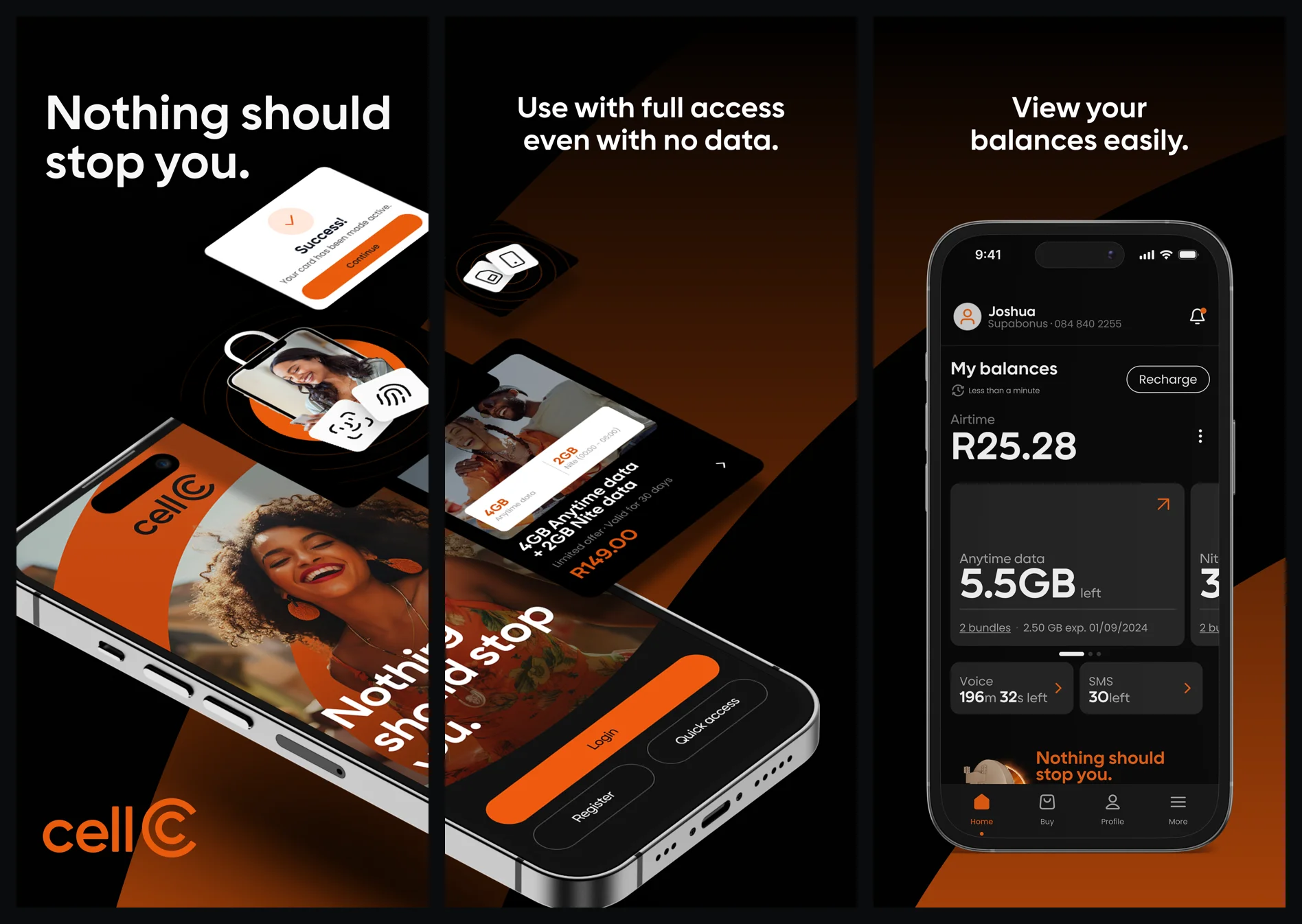
Abantu took over an existing Cell C mobile application from a previous vendor. The job wasn't simply to replace the code. We needed to understand how the system worked, what the business depended on and what had happened before we arrived.
Understanding
The first phase was learning.
We spent time understanding:
- authentication
- service calls
- available information
- where data lived
- customer journeys
- customer feedback
- existing strengths
- existing weaknesses
- operational constraints
We also worked with the previous vendor during handover to understand the history of the system. That context mattered.
You can't responsibly change a system you don't understand.
Rebuild
Then we rebuilt it.
Once the domain and system were understood, the work moved into rewriting, maintaining, optimising and scaling the application. The technical work was always connected back to the business behaviour the application needed to support.
Lesson
Architecture decisions have consequences.
One of the important lessons from the work was that technical decisions and business timelines don't always align perfectly. A decision can be reasonable at one point in a product's life and still create a problem later. The answer isn't to pretend the decision never happened. The answer is to understand the constraint and build a path forward.
Approach
Solve today's problem without creating tomorrow's dead end.
When a later version of the product exposed an architectural weakness, the solution needed to accommodate the existing state while creating a more robust path forward. That required understanding both the original decision and the business requirement that had changed.
Some implementation details are intentionally omitted because of client confidentiality.
Links
Open the product
Have a problem you're trying to solve?
You don't need a finished brief. You don't need to know which technology you need. Start with the problem. We'll work out the rest together.