CASE STUDY · MARKETPLACE
From a chauffeur business to a marketplace.
Abantu inTransit started as a real transport business. The software came afterwards. What began with one vehicle, manual bookings and WhatsApp became a marketplace for chauffeur and luxury transport agencies.
Origin
The software came from the business.
The idea started with a Mercedes V-Class. After hiring one for a friend's wedding in Johannesburg, I spent time talking to the driver and learning how the chauffeur business worked. That conversation eventually led to buying a V-Class and starting the business ourselves.
At first, everything was manual. Bookings came through word of mouth, networks and WhatsApp. Pricing, availability, payment, administration and follow-up all depended on people keeping track of things. That became the first problem to solve.
First product
First, make the operation easier.
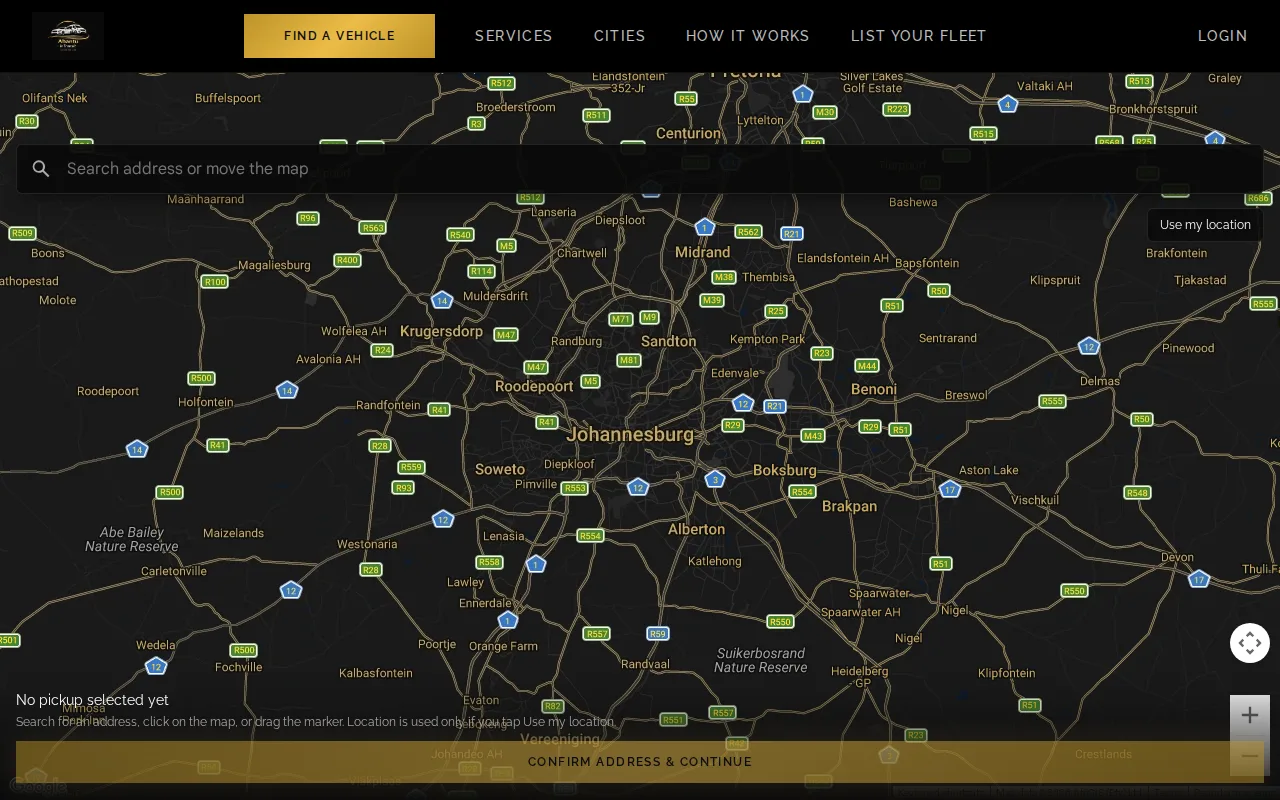
The first system was deliberately simple. A customer could enter their details, choose a vehicle and start the booking process. Payment and the final transaction were initially handled through WhatsApp.
It wasn't trying to be a marketplace yet. It was solving the problem we actually had.
Marketplace
Then the business model changed.
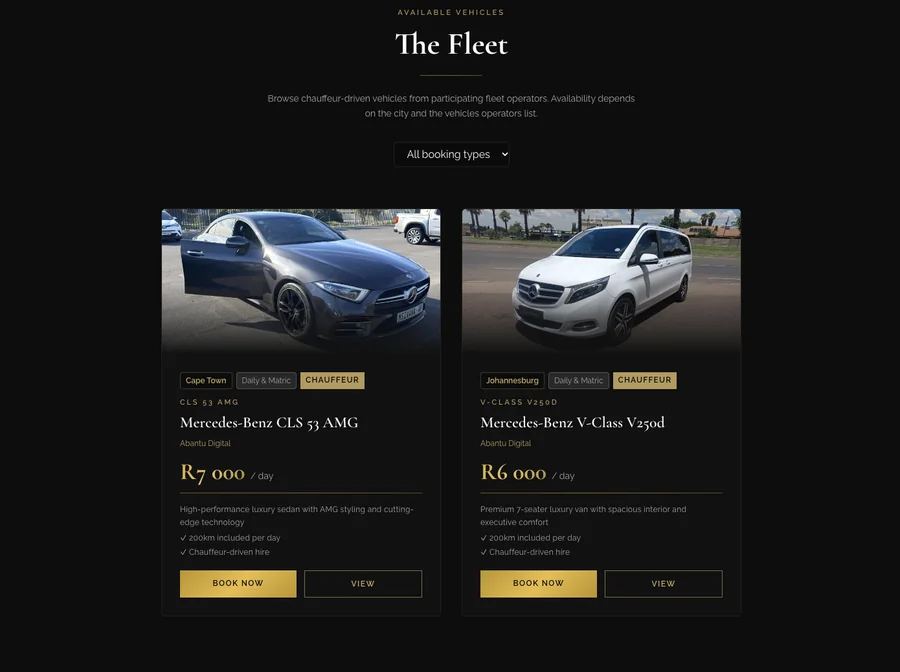
Paystack subaccounts and split payments introduced a different possibility. Instead of only operating our own vehicles, the platform could allow other agencies and vehicle owners to participate.
Agency capabilities:
- create an account
- complete verification
- list vehicles
- set pricing
- manage availability
- provide vehicle information
- receive bookings
- receive its share of the payment
The platform takes 15% of bookings from participating agencies, with the agency receiving 85%. Affiliates can also participate in the platform economics.
The success of my competitors is my success.
Customer flow
Find. Choose. Book. Pay.
The customer's experience should feel simple even though the platform is handling significantly more complexity underneath.
- Customer
- Platform
- Agency
- Vehicle
- Driver
- Find
- Choose
- Book
- Pay
Agency flow
Verify. List. Receive. Fulfil.
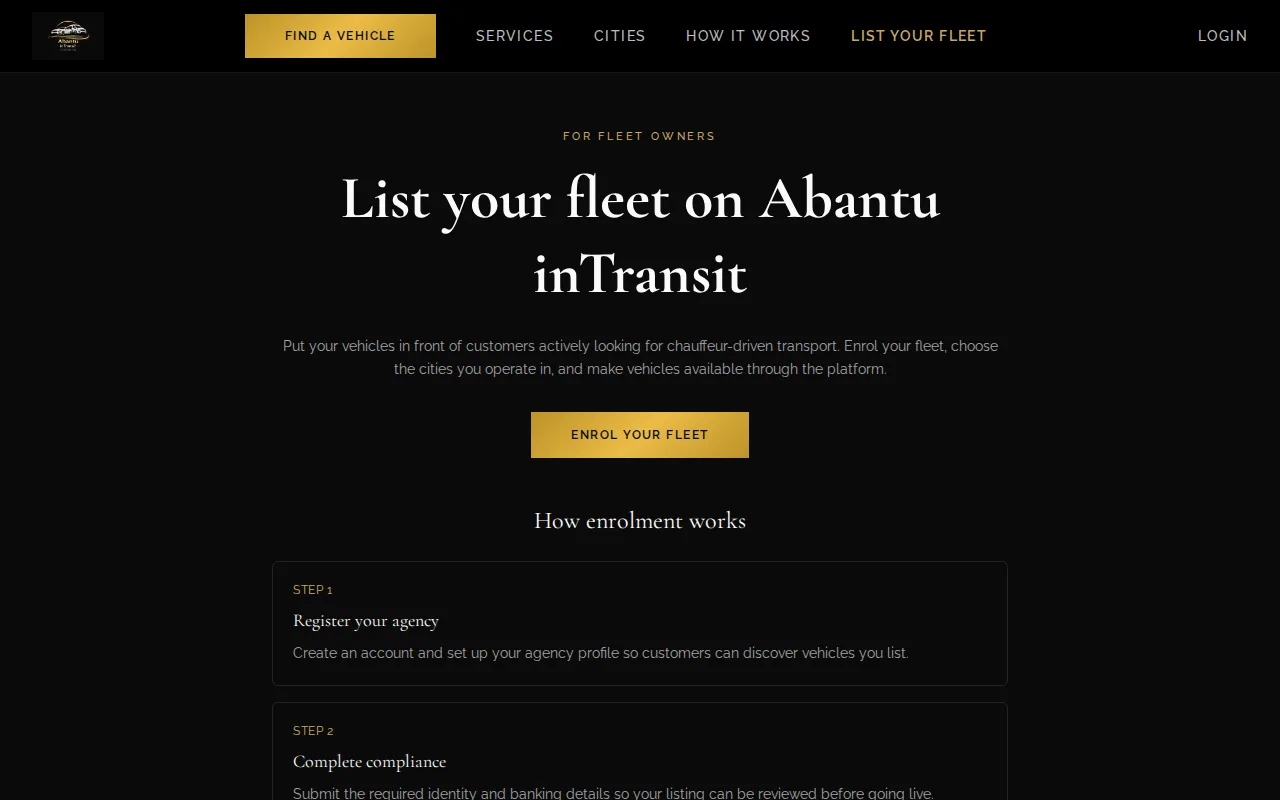
The agency experience is built around trust and operational control. Agencies need to be able to prove who they are, prove ownership or control of their vehicles and provide the information customers need to make a booking confidently.
Trust
A marketplace needs more than listings. It needs trust.
As the platform grew, onboarding became more important. Agency verification can involve:
- company or individual information
- proof of vehicle ownership
- licensing documentation
- insurance information
- financed-vehicle documentation where applicable
- banking details
- vehicle information
- driver information
The system uses document and data processing to assist with verification. AI can help extract and cross-reference information, but confidence in an automated result is not the same thing as accountability. Human review remains part of the process where appropriate.
Technical evolution
The architecture evolved with the product.
The platform started as a Firebase-backed application. As the product became more complex, the architecture evolved through separate backend services, Vue, TanStack Start and eventually server-side rendering on Fly.io.
The move to SSR wasn't simply a technology preference. Search visibility became a product requirement. The architecture had to support the business we were actually building.
Technology follows the problem.
Difficult part
The difficult part wasn't the screens.
The difficult parts were:
- mapping secure booking flows
- making marketplace payments correct and transparent
- handling agency and vehicle relationships
- creating trustworthy onboarding
- dealing with documents and verification
- deciding where AI could assist and where humans needed to remain accountable
- keeping the system understandable as the product evolved
That's where the engineering work lives.
Current state
Still a product in progress.
The platform currently operates with vehicles in Cape Town and Johannesburg. Customers can book vehicles and agencies can register and begin the onboarding process. The product is continuing to evolve around agencies, drivers, availability, payments, trust and the customer experience.
This isn't a finished software project. It's an operating business becoming a software platform.
The vehicle gets the customer interested. The driver gives them confidence.
Links
Open the product
Have a problem you're trying to solve?
You don't need a finished brief. You don't need to know which technology you need. Start with the problem. We'll work out the rest together.